
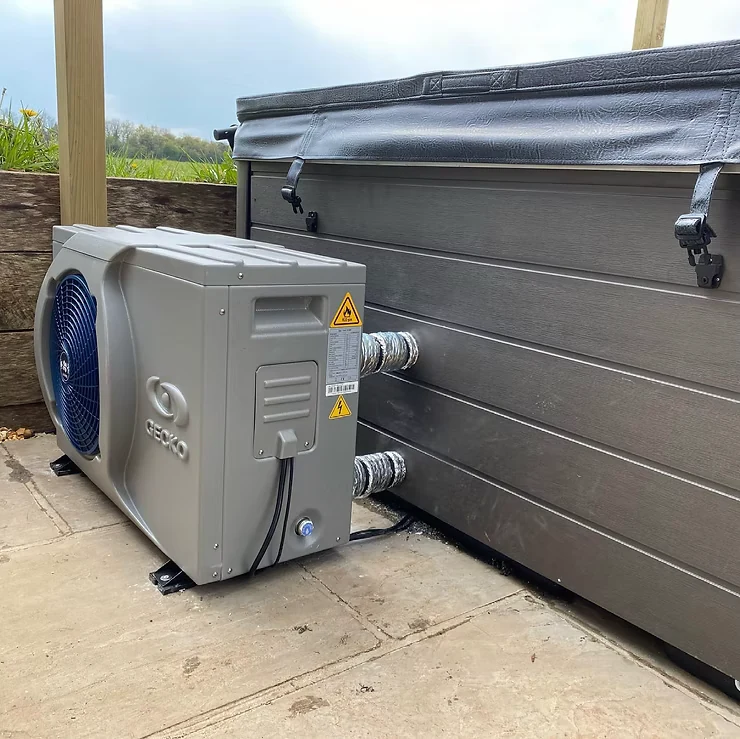
Could a heat pump reduce the cost of heating your hot tub?
Hot tubs are designed to maintain warm water for long periods, often throughout the year. That makes heating efficiency an important consideration for anyone who uses their spa regularly.
One option is an air-source heat pump.
Rather than producing all its heat through an electric resistance heater, a heat pump transfers energy from the surrounding air into the hot tub water.
Under suitable conditions, this can use considerably less electricity to deliver the same amount of heat.
But a heat pump isn't automatically the right choice for every installation.
How does a hot tub heat pump work?
A heat pump draws heat energy from outdoor air and transfers it into the water circulating through the system.
It uses electricity to operate a compressor, fan and associated components, but the heat delivered to the water can exceed the electrical energy consumed.
You may see this described using a coefficient of performance, or COP.
For example, a COP of 4 means that, under the specified test conditions, the heat pump delivers approximately four units of heat for every one unit of electricity consumed.
That figure is not a guaranteed year-round result. Performance changes with air temperature, water temperature, humidity and operating conditions.
How much could you save?
Savings depend on several factors:
- The efficiency of the existing heating system.
- The size and insulation of the hot tub.
- The condition of the cover.
- Outdoor temperatures and seasonal weather.
- Your preferred water temperature.
- How often the hot tub is used.
- Electricity tariffs and operating schedules.
- The heat pump's actual performance in your installation.
A heat pump may provide substantial savings for a regularly used hot tub, but quoted percentages and payback periods should be treated cautiously unless they're supported by a calculation specific to your circumstances.
A well-insulated hot tub with an effective cover is generally a better starting point than a poorly insulated installation that loses heat continuously.
Will a heat pump work in winter?
Many heat pumps can operate in colder weather, but their heating capacity and efficiency usually change as the outdoor temperature falls.
Some models are better suited to low-temperature operation than others.
The correct choice depends on the local climate, the heat demand of the hot tub and the manufacturer's operating specifications.
A heat pump should not be assumed to replace the hot tub's existing frost-protection arrangements. The overall installation must be designed to protect the equipment and plumbing during freezing conditions.
What should you consider before installation?
Space and airflow
An outdoor heat pump needs adequate clearance for air circulation. Positioning it in an enclosed or poorly ventilated space can reduce performance.
Noise
Although modern units can be relatively quiet, fan and compressor noise should be considered, particularly near bedrooms, neighbouring properties and outdoor seating areas.
Plumbing compatibility
The heat pump needs to be correctly integrated into the water circulation system. Flow rates, connections and any bypass arrangement must suit both the heat pump and the hot tub.
Electrical requirements
Electrical supply, isolation, protection and installation arrangements must comply with the manufacturer's requirements and applicable regulations.
Controls and heating strategy
Some systems operate alongside the existing heater; others require different control arrangements. Compatibility should be assessed before ordering equipment.
Is a heat pump worth installing on an older hot tub?
Potentially, yes.
An older hot tub may still be a good candidate if it is mechanically sound and its circulation, insulation and controls are suitable.
However, installing a heat pump on a spa with a damaged cover, poor insulation or unresolved faults may not be the best first investment.
We would generally recommend assessing the overall condition of the hot tub before deciding on an upgrade.
Getting the best from your heat pump
Even an efficient heat pump cannot compensate for unnecessary heat loss.
Keep the cover in good condition, maintain clean filters, ensure adequate water circulation and use the system according to the manufacturer's guidance.
Avoid frequent changes to operating settings without understanding how they affect heating and freeze protection.
Ask Spa Simple about a heat pump
Spa Simple can advise on air-source heat pump upgrades for suitable hot tubs.
We can discuss your existing installation, available space, compatibility and the practical considerations involved.
Interested in a heat pump? Send us an enquiry through the existing upgrades enquiry route, including your hot tub make and model where possible.